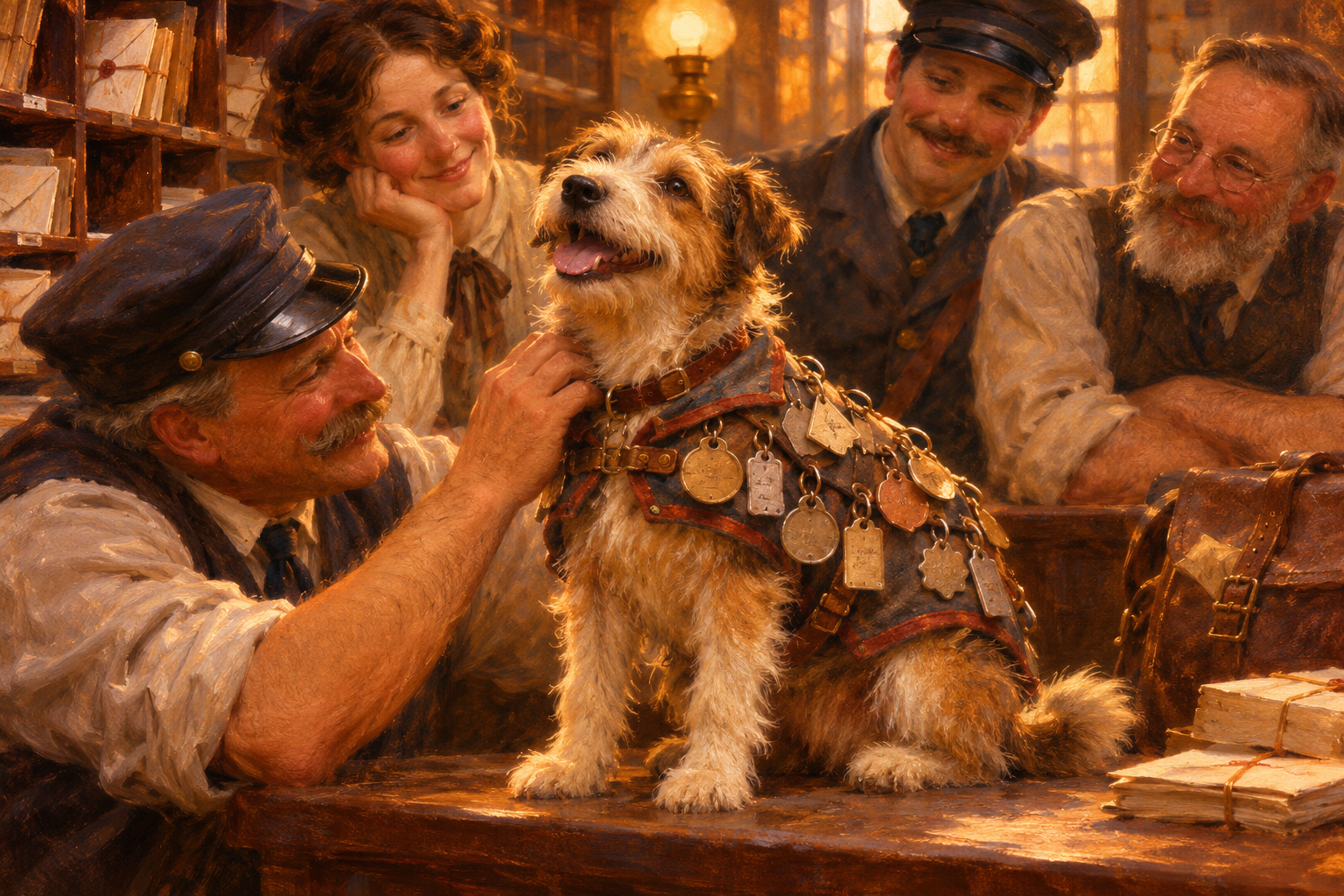
Someone offered Meriwether Lewis three beaver skins for Seaman, his Newfoundland dog.
Lewis declined.
We don’t need to invent what he said or imagine a grand speech. The refusal is enough. Here was an offer with a clear value, and here was a dog Lewis would not trade for it.
But the most moving part of Seaman’s story isn’t that he belonged to someone who wanted to keep him. It’s that, as the Lewis and Clark Expedition went on, the language around him began to change.
Journal writers began referring to Seaman as their dog.
That small word carries a great deal. To understand its weight, look at what Seaman brought to the people around him.
A companion who could help
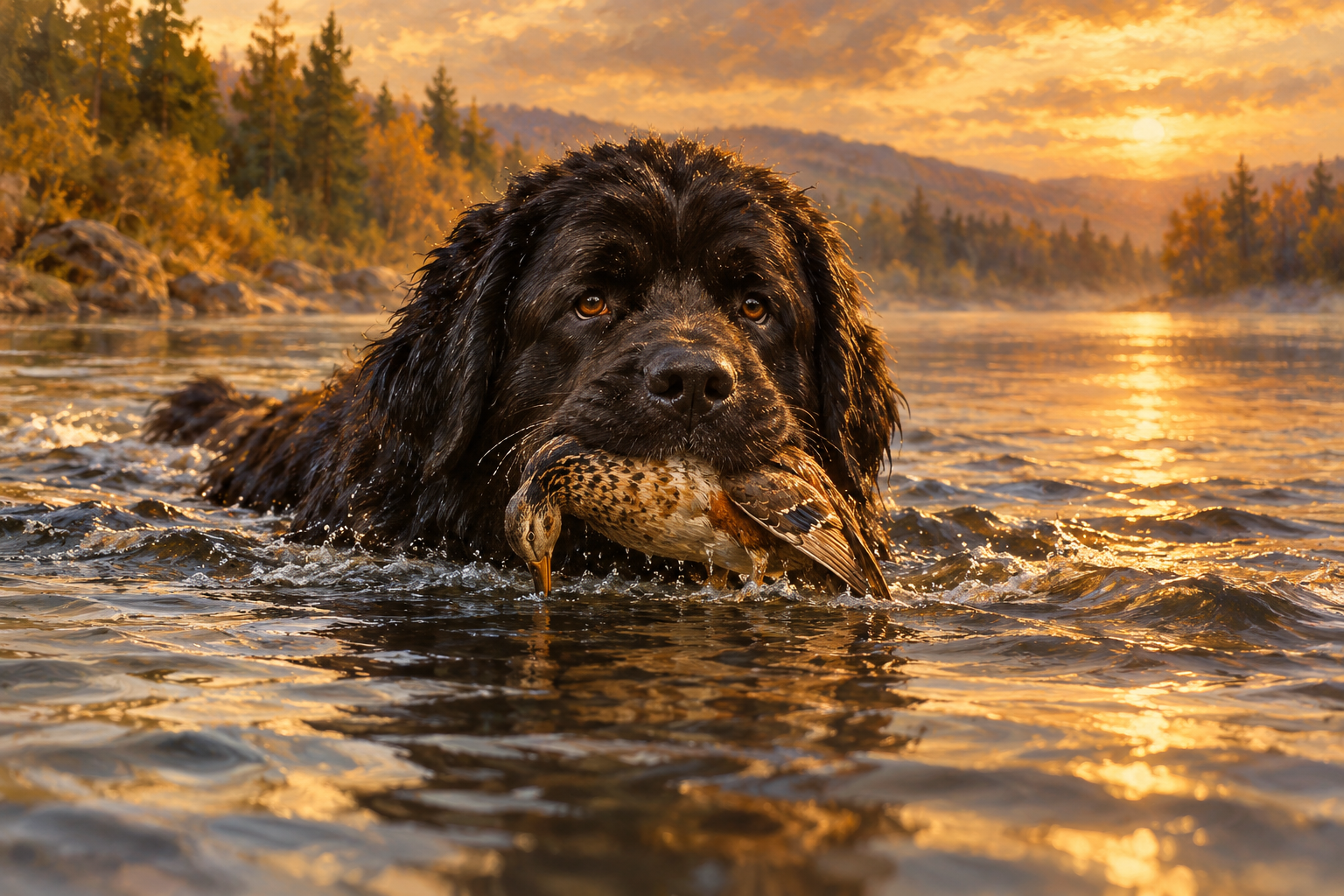
Seaman was Lewis’s Newfoundland, and he joined him on the Lewis and Clark Expedition. He hunted and retrieved game in the water. He alerted the expedition to bears and helped protect people from charging bison.
Those facts are easy to read quickly. A dog retrieved. A dog warned. A dog helped.
Slow down, though, and there is something deeply moving inside them: people had reason to be grateful that this particular animal was there.
Picture the feeling of watching a dog in the water, knowing he is doing something that matters to the people waiting for him. Your attention follows him. The task matters, but so does the living creature carrying it out. You want the work done. You want the dog safe.
That is where usefulness and love can become hard to pull apart.
A dog can begin as someone else’s companion. You know whose dog he is. Then you come to understand his presence through your own experience. He becomes part of what you count on, part of what you would miss.
The journals cannot tell us every private feeling. But their changing language gives us a small, clear window into belonging.
When danger makes belonging real
There is a special kind of gratitude we feel toward an animal who helps keep people safe.
Seaman alerted the expedition to bears. He also helped protect people from charging bison. We should let those facts stand without adding a dramatic chase, a narrow escape, or words nobody recorded in the facts we have.
They already hold enough tension.
Imagine the fear that danger can bring, and then the knowledge that a dog has helped. Relief has somewhere to go. It gathers around a creature who cannot receive a full explanation of what his presence means.
How do you tell a dog that you are glad he is here?
We can write whole pages about gratitude. A dog cannot read them. That gap feels familiar to anyone who has ever looked at their pet and wished, just for a moment, that love could be explained in a language both understood.
We don’t know what Seaman understood about his place among these people. We do know that the people writing about him began to call him theirs.
The little word that changed the story
At the start of this story, it is simple to identify Seaman: Lewis’s dog.
As the expedition progressed, that description no longer held everything. In the journals, he became their dog.
It is a quiet change. There is no need for a ceremony in the telling. The word itself does the work.
“Their” makes room for attachment beyond an owner. It suggests a circle of people who have begun to include an animal in their sense of who belongs. Seaman’s story becomes larger without his having to become anything other than a dog.
Perhaps that is why this detail can touch us more deeply than a list of brave deeds. Most of us will never share an expedition with our pets. We can still recognize the feeling of a household, or a whole circle of people, making room for an animal.
Someone may be able to say, accurately, “This is my dog.” Yet other people would feel his absence too.
Seaman’s recorded acts help us understand why he mattered. That small shift in language helps us feel it.
Enough to be remembered
There is no need to invent Seaman’s later fate to give this story an ending. What we have is enough: a dog who helped, an offer Lewis declined, and journal writers who came to call him their own.
Imagine your own pet held in a portrait, with the expression you would know anywhere. Think of the people who would look at it and feel that same quiet recognition: yes, that’s our dog. A whole bond can live inside a look.
Would a custom pet portrait made from your favorite photo be a lovely way to honor that feeling?