The curls catch your eye. The muddy paws, enthusiastic greetings, and stolen socks tell you what living with a Goldendoodle is actually like. These dogs can be wonderful companions, but that teddy-bear face comes with real grooming, training, and exercise needs.
This goldendoodle guide covers the everyday details that help you decide whether one fits your home—and help your dog thrive once they arrive.
What is a Goldendoodle?
A Goldendoodle is a Golden Retriever–Poodle cross, sometimes with several generations of Goldendoodle ancestry. There is no single guaranteed size, coat, or personality. Even littermates can differ noticeably.
Standard Goldendoodles can become substantial dogs; smaller varieties usually have smaller Poodles in their ancestry. Ask about both parents’ adult weights instead of relying on labels such as “mini.” If predictable size matters, adopting an adult gives you a clearer picture.
Labels such as F1 and F1B describe ancestry, not quality. They cannot promise a particular temperament, an allergy-safe coat, or freedom from inherited disease.
Personality: affectionate, clever, and sometimes wonderfully bouncy
Many Goldendoodles enjoy people, play, and learning. That enthusiasm can also mean jumping on visitors, carrying off laundry, or following you from room to room. Friendliness still needs manners.
They can suit families, but children and dogs need active supervision. Teach children to leave a dog alone while eating or sleeping, and give your dog a quiet retreat. Never expect a patient reputation to replace boundaries.
Meet the individual dog whenever possible. Ask a breeder or foster carer how they handle unfamiliar people, grooming, frustration, and time alone—not simply whether they are “good with kids.”
The coat deserves its own plan
Goldendoodle coats may be straight, wavy, or curly, and puppy fluff can change as the adult coat grows in. A soft-looking surface can hide tight tangles underneath.
- Make a daily coat check part of your routine. Pay attention behind the ears, under the collar, in the armpits, and around the legs.
- Ask a groomer to demonstrate brushing in small sections, then checking gently with a metal comb. Skimming over the top misses knots near the skin.
- Keep sessions comfortable: a few gentle strokes, a reward, then a break. Build tolerance before tackling longer sessions.
- Arrange professional grooming on a schedule suited to your dog’s coat and haircut. Ask for a maintenance demonstration and a realistic price before committing to a long, fluffy style.
- Leave tight mats to a professional. Pulling hurts, and scissors can cut skin hidden inside a mat.
A shorter trim can make care easier, but it does not eliminate brushing. Choose the haircut you can maintain comfortably.
Are Goldendoodles hypoallergenic?
No dog is reliably allergy-free. The American Academy of Allergy, Asthma & Immunology explains that allergens come from proteins associated with dander, saliva, and urine—not simply shed hair.
Low shedding therefore does not guarantee fewer symptoms. If someone in your household has allergies, consult an allergist before committing. Spending time with the actual dog may provide useful information, but a symptom-free visit cannot guarantee living together will be comfortable.
Build a day with movement, thinking, and rest
Plan daily walks and play alongside chances to sniff and solve simple problems. A garden is useful, but it does not replace shared activity. Exercise needs vary with age, health, size, and the individual dog.
Try a sniffing walk in the morning, a short training game later, and another outing when the weather is comfortable. Hide some of their measured meal around a safe room for a supervised food hunt. Rotate activities rather than relying on endless ball throwing.
Puppies need frequent rest and brief, age-appropriate outings. Ask your vet before introducing sustained running or demanding exercise. An overtired puppy may become mouthier and wilder instead of settling down.
Teach the habits you want early
The RSPCA recommends reward-based training. Start with practical skills: responding to their name, coming when called, walking on a loose lead, and resting on a mat.
- Reward four paws on the floor before a greeting turns into jumping.
- Practise recall indoors first, then use a long line in a safe outdoor space.
- Introduce brushes, paw handling, and grooming sounds gradually, pairing comfortable exposure with treats.
- Practise tiny, manageable separations while your dog is relaxed. Increase time gradually; persistent distress needs help from your vet or a qualified behaviour professional.
Health, food, and the practical budget
Goldendoodles can inherit conditions affecting their hips, eyes, and hearts. Ask for verifiable parental screening results, not just “vet checked” assurances. The Goldendoodle Association of North America’s testing standards provide a useful checklist; DNA testing alone is not the whole picture.
Choose complete food appropriate for life stage and expected adult size, measure portions, and include treats in the daily allowance. Budget for grooming, preventive veterinary care, training, and unexpected illness. PetMD lists a typical lifespan of 10–15 years, so think beyond puppyhood.
Make room for their particular personality
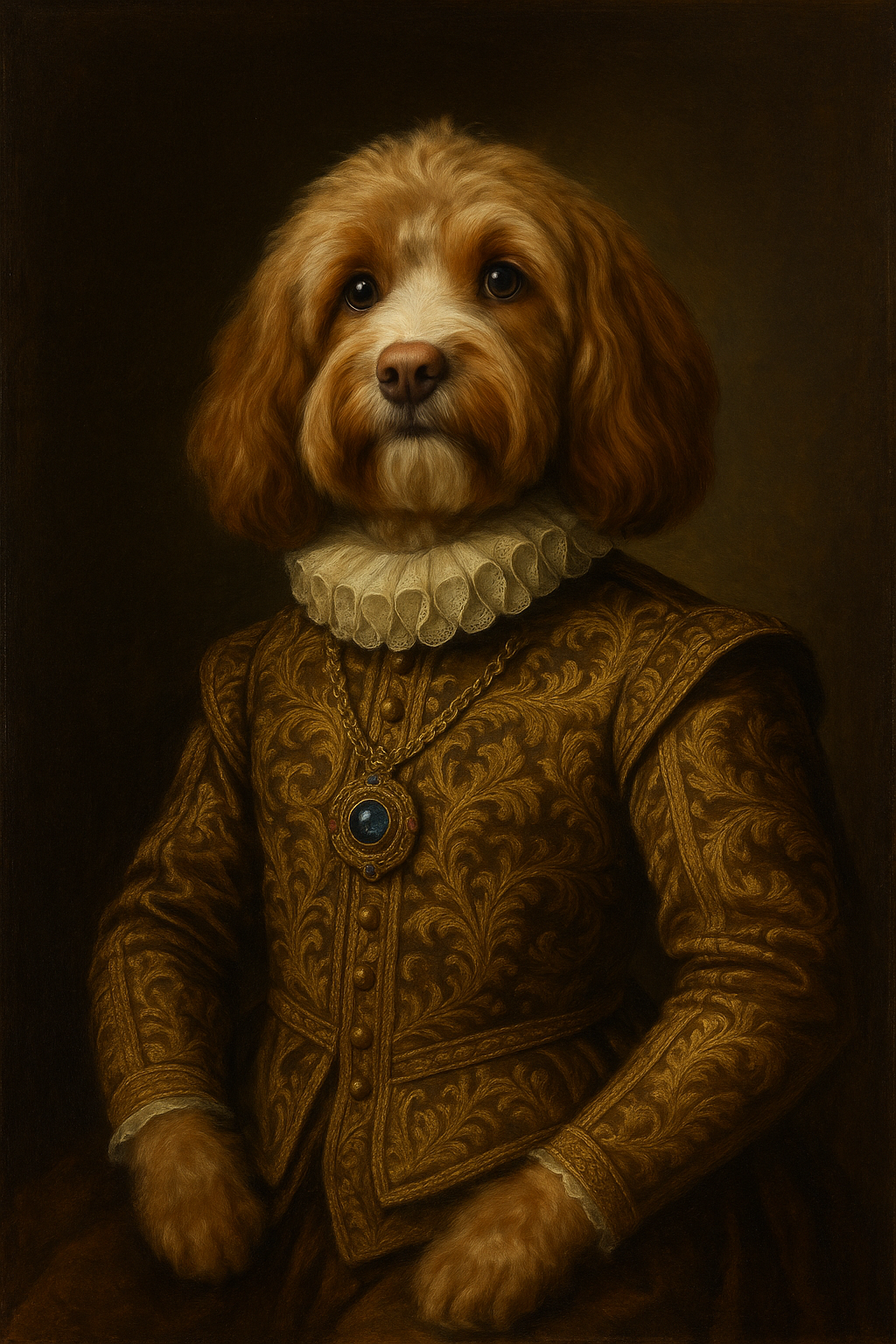
Photograph the little things: the crooked head tilt, favourite toy, or post-walk grin. For a clear keepsake photo, get down to eye level near a window and keep both eyes in focus. That image could become a custom Munzely portrait when you want to remember this stage.
Give your Goldendoodle a manageable routine, patient teaching, and comfortable coat care. Then leave plenty of room for getting to know the dog behind the curls.