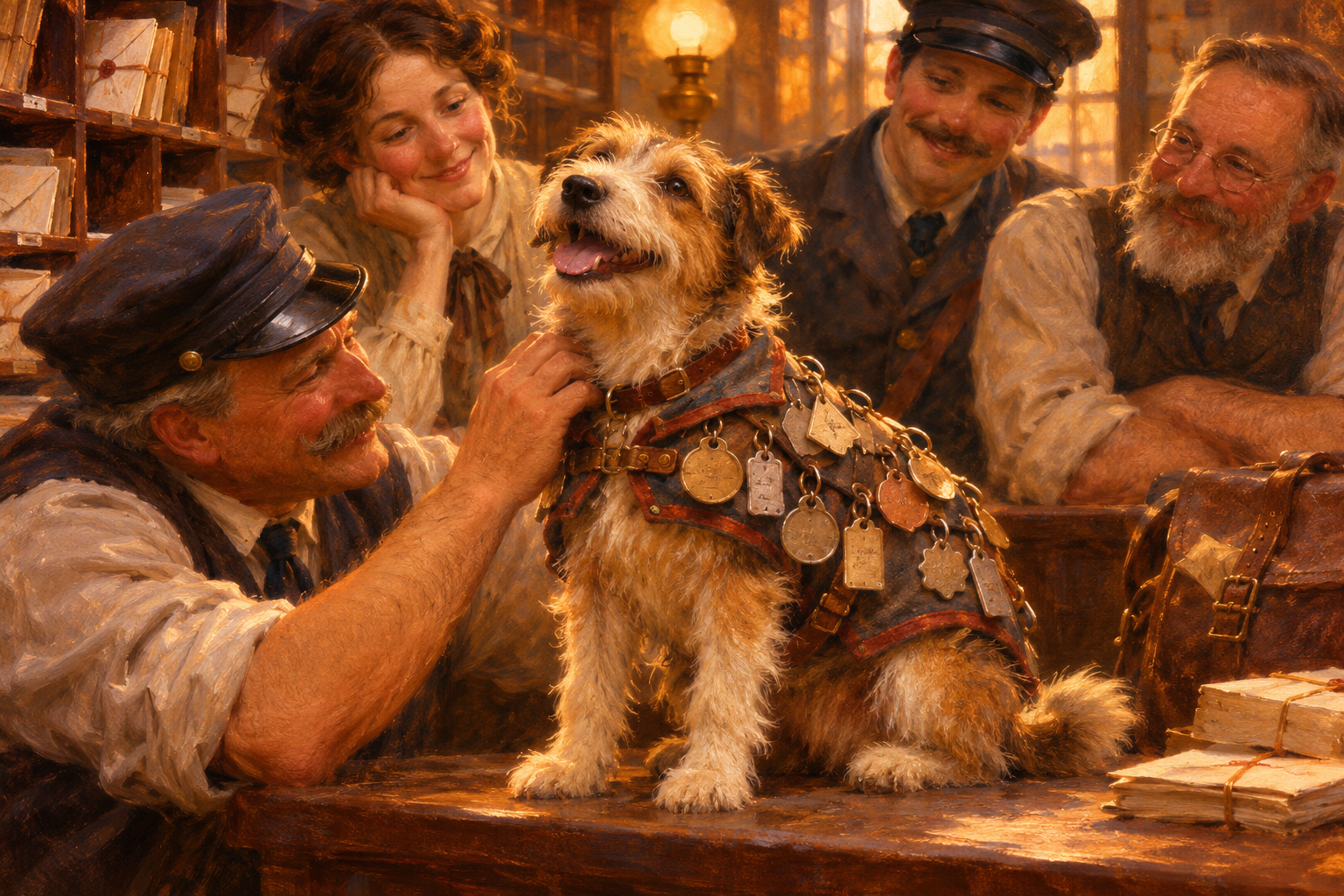
In Sicily, a family dog named Chips attacked a machine-gun position, leading to the surrender of its crew.
It is the kind of sentence that makes you stop. A dog. A weapon. A moment you can hardly bear to picture. You want to know how he survived, what happened next, where the story ends.
But hold on to the words “family dog.” Because before Chips belonged in a story about war, he belonged to a family. And the part worth waiting for is what happened when he could belong to them again.
A dog with somewhere to come home to
Chips was a family dog from New York. He served with the US Army’s 3rd Infantry Division during World War II.
Those facts sit close together on a page. Emotionally, they feel very far apart.
One gives us a dog with people of his own. The other places that same dog in a war. We know his service and his return. We do not need to invent his family’s goodbye to feel the ache between them.
If you love a pet, you can probably find that ache without much help. Think of leaving home and catching your dog looking up. Think of how hard it is to explain an absence to an animal who knows your presence so well.
Now consider the other side: being the person who stays behind. The dog you love is somewhere you cannot reach. You cannot call him over. You cannot put a hand against his side and feel, for yourself, that he is all right.
We cannot say exactly how Chips’s family carried that feeling. But knowing he had a family changes how we read everything that follows. His life mattered far beyond what he could do in service. Somewhere, there were people to whom he was already Chips.
The moment that made history
In Sicily, Chips attacked a machine-gun position. His action led to the surrender of its crew.
The plain account is powerful enough. It needs no imagined commands, no invented thoughts in a dog’s head, no extra danger painted around the edges. Chips went toward a threat, and the crew surrendered.
There is something difficult about holding that image beside the words “family dog.” We tend to keep those worlds apart. We picture a beloved pet within reach, somewhere we can offer comfort. Here was a beloved pet in a place where comfort was beyond his family’s power to give.
That is what makes his story catch in the throat. Admiration comes with a wish that he could be safe. You can be stunned by what he did and still want the next sentence to take him home.
For anyone who has ever loved a dog, that wish needs very little explaining.
The sentence we were waiting for
After his discharge in 1945, Chips returned to his family.
Read that slowly. He returned to his family.
We do not have to supply the sound of the door, the first touch, or the way he moved when he saw them. Those details belong to the people who were there. The fact itself gives us enough: the dog who had served in a war came home.
Until this point, his story asks us to hold our breath. Here, we can let it go.
Returning home can sound like a small ending beside an act of wartime courage. Yet it answers the question that has been running beneath the whole story. Would Chips get to be with his people again?
Yes.
His story has room for both the extraordinary act and the deeply ordinary thing we wanted for him. He could be remembered for what happened in Sicily. He could also return to the family whose bond with him did not depend on that act.
An honour later, a home first
In 2018, Chips was awarded the PDSA Dickin Medal posthumously. That was a later animal honour, separate from the question of military awards during his service. It belongs to the remembrance of his life, long after his homecoming.
The distinction matters. So does the order of the story: service, return, and later recognition.
An honour helps people who never met a dog remember his name. A family knows that name in another way. For them, it belongs to a relationship, to the animal himself. Public recognition can preserve a remarkable act. The bond was already there.
Imagine a portrait of your own pet, and what you would see in it that a stranger might miss. A familiar look. The face you search for when you come home. Your pet does not need a place in history for that love to be worth keeping.
Would you like to turn a photo of the pet you love into a custom pet portrait, a gentle way to honour the place they hold in your life?