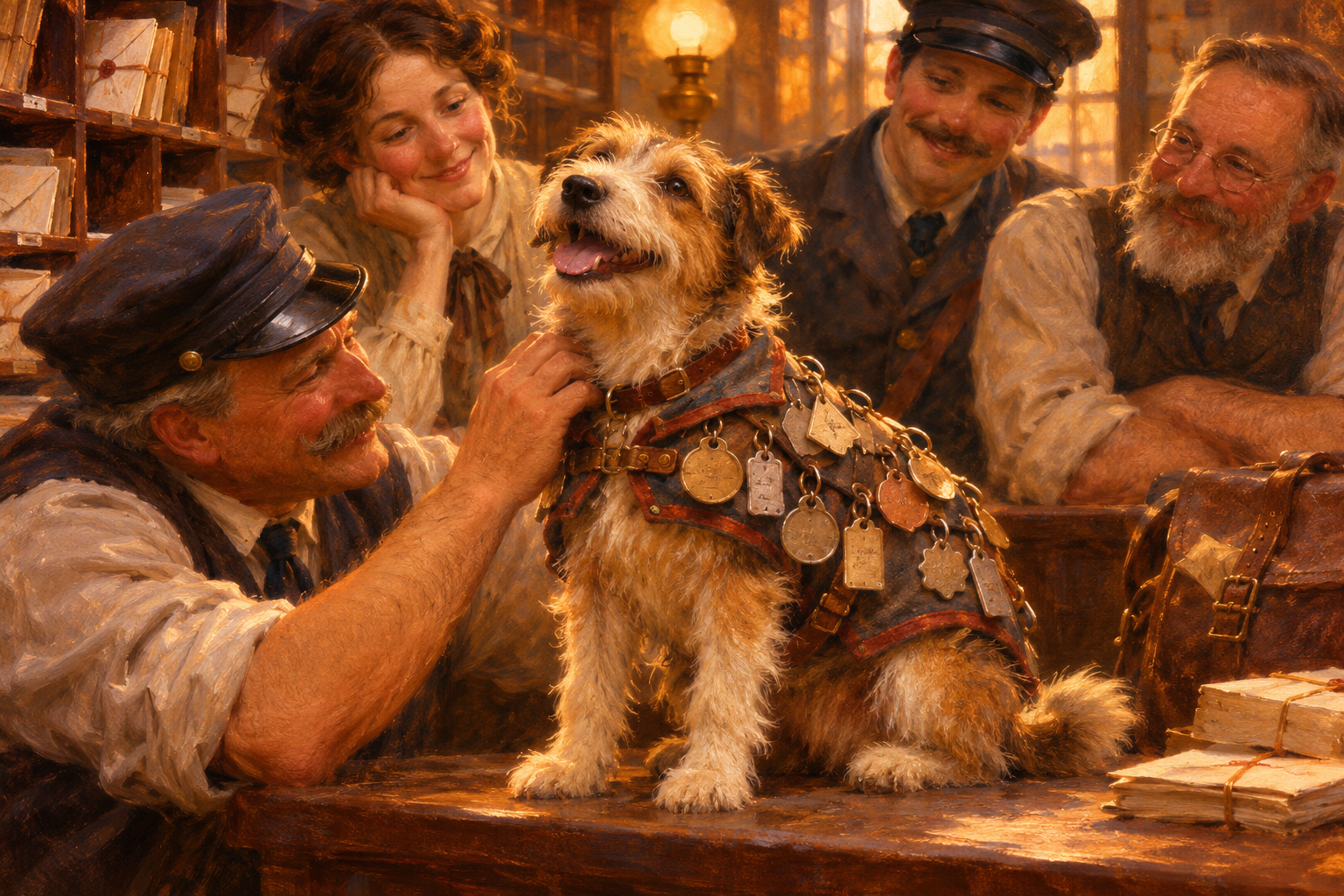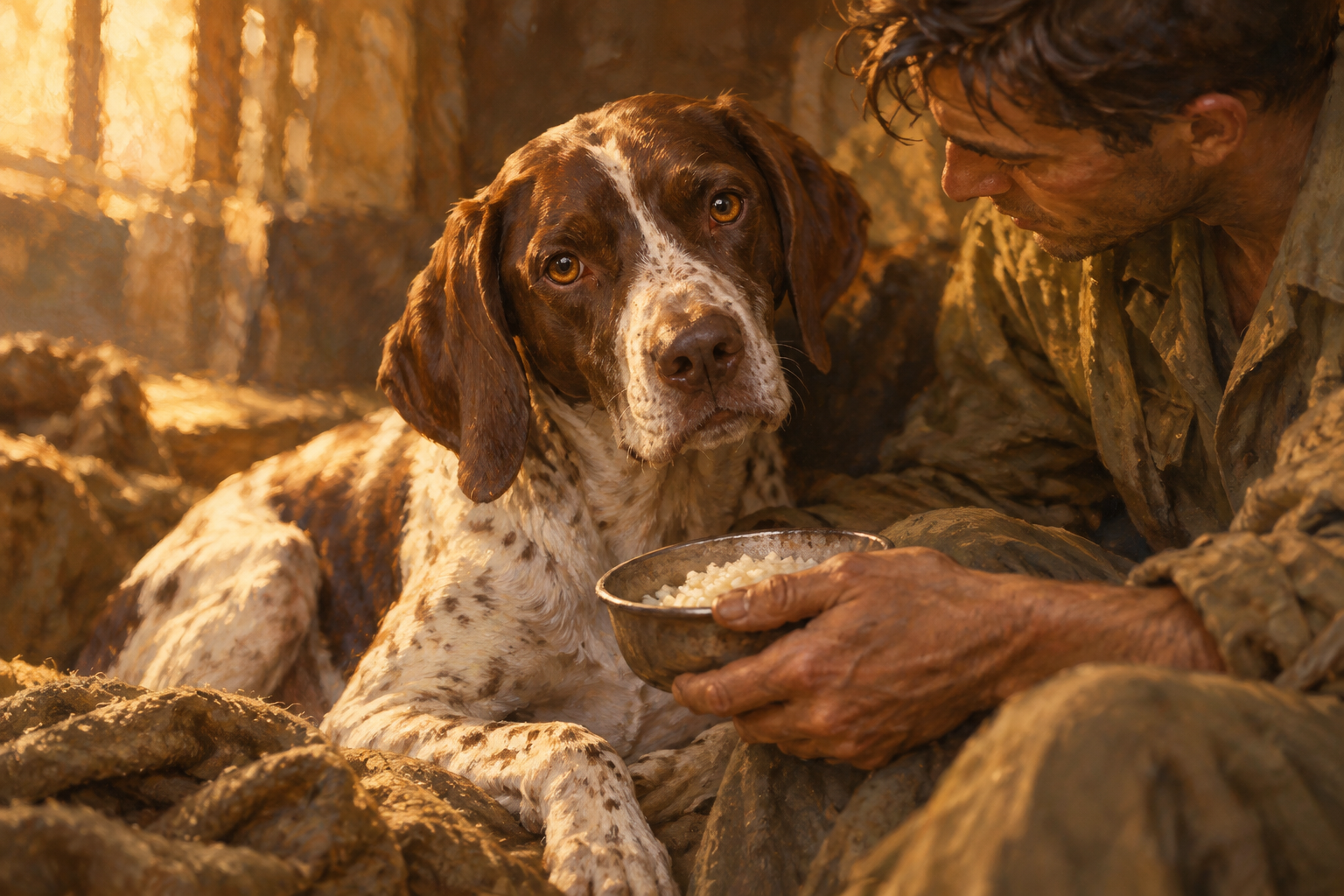
Frank Williams shared his rice ration with a dog while they were prisoners of war.
Her name was Judy. She was a Pointer, and she needed food. Frank had a ration to share. Put that way, the act sounds simple. But captivity gives a choice like that a different weight. Food is something you need for yourself. Sharing it means making room for another life inside your own need.
We do not need to invent what Frank said to her. We do not need to give Judy a human thought. The act itself is enough: some of his rice became hers.
And the care in this story did not travel in just one direction.
Before the shared rice, there was water
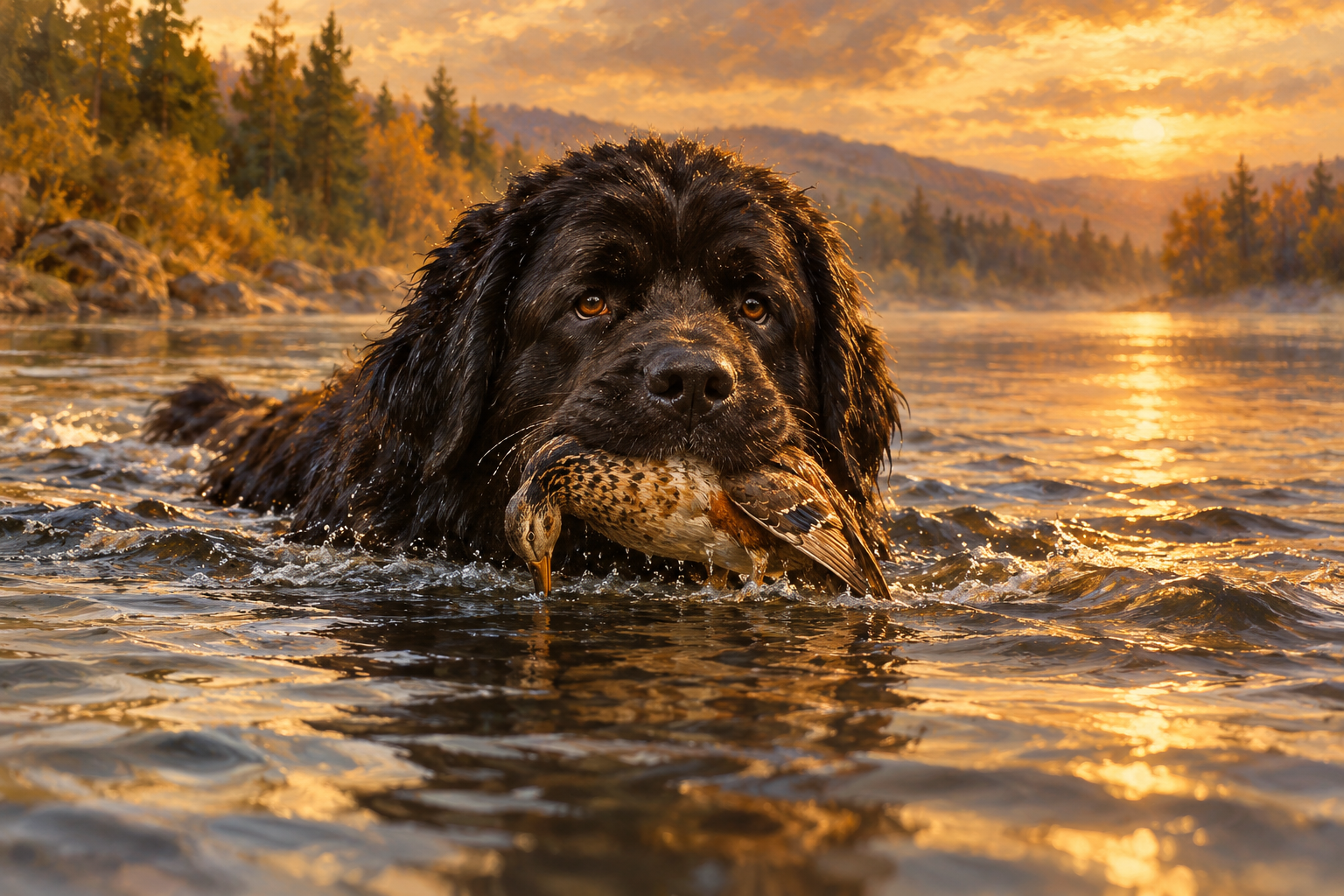
Judy had been the mascot aboard HMS Grasshopper. After a shipwreck, she located fresh water for survivors.
Fresh water. Such ordinary words for something that can mean so much.
Most of us know the small relief of getting a drink when we are thirsty. After a shipwreck, finding fresh water carries a far greater weight. Judy helped meet a basic human need at a moment when so much had been lost.
There is no need to dress that up. A dog found water. People needed it. Her part in their survival was real and practical, as plain as thirst.
That matters because it would be easy to tell Judy’s story only as the story of a beloved animal being protected. She did need care. But she also gave something people needed. Before we reach the rice ration, we already know this: Judy was more than someone to look after.
A dog inside the word “prisoner”
During World War II, Judy was captured and officially registered as a prisoner of war.
Pause over that for a moment. A Pointer. A ship’s mascot. A dog who had found fresh water for survivors. Now, officially, a prisoner.
The words are hard to fit together. We tend to place dogs in the parts of life that feel familiar: company, care, the simple pleasure of being near each other. Captivity belongs to a different kind of story. Yet Judy was there, and her companionship helped sustain the prisoners.
Company can sound like a small thing until you imagine its absence.
It cannot remove captivity. It cannot make hunger harmless or undo what has happened. But a bond can still matter inside circumstances it cannot fix. Having another living being to care for gives care somewhere to go. Receiving companionship means that something warm and personal remains possible.
That is the quiet heart of Judy’s story. Her presence did not have to solve everything to help people hold on.
What a portion of rice can hold
Return to Frank and the rice.
We cannot know every feeling behind that choice from the facts we have. We can see what he did. He shared his ration with Judy. Her need mattered enough for him to give her part of what he had.
There is a kind of tenderness that becomes clearest through practical things. Food offered. A need noticed. Care made useful. It does not require a speech, and it does not become more meaningful if we add one.
Judy’s companionship helped sustain prisoners; Frank’s shared food helped sustain her. Those acts were different, but they belonged to the same bond. Each had something the other needed.
Perhaps that is why this story reaches beyond its setting. Many pet lovers know the feeling of being responsible for an animal and, at the same time, being steadied by that animal. You provide the food and care. Yet the relationship gives something back that can be hard to name without making it sound smaller than it is.
Judy and Frank’s story gives that feeling a clear shape. A rice ration shared in captivity. A dog’s company helping people endure. Neither part makes the other less important.
The honor, and the bond beneath it
Judy received the Dickin Medal in 1946.
It is a fitting place to pause and honor her. But the detail that may stay with you is smaller than a medal: Frank sharing his rice. Recognition helps us remember a remarkable animal. An act of care helps us feel the relationship behind the history.
Judy’s story leaves us with something worth carrying into ordinary life. A bond does not need words to have weight. Care can be something you give and something that helps carry you, all at once.
Imagine your own pet in a portrait, with the familiar shape of their face and the expression you would know anywhere. Let it bring to mind the ordinary care you share, and how much that small, daily bond has come to mean.
Could a custom pet portrait made from your pet’s photo be a gentle way to honor that love?